Middleton Self Storage
Storage in Birmingham
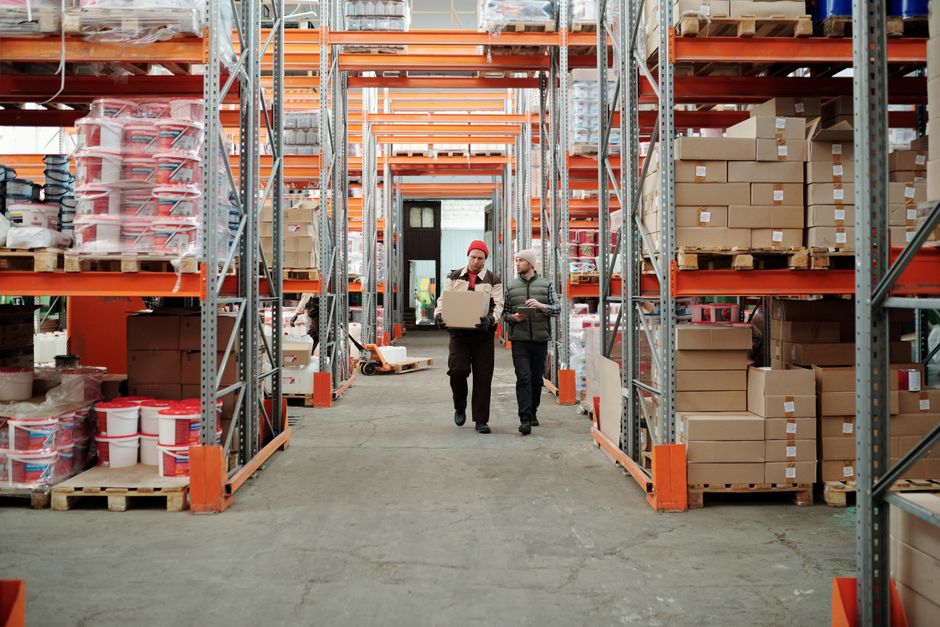
If you have ever woken up at three in the morning convinced you heard the van door slide open, you already know the problem. Tradespeople across the UK carry thousands of pounds worth of kit every day, and the anxiety of leaving it parked on a driveway or a dark street never really fades. The numbers back up the fear: tool theft from vehicles rose sharply again in 2025, and insurers are tightening their terms in response. A dedicated tools and materials self storage unit is not just a convenience anymore. It is becoming a standard part of running a secure, efficient trade business in 2026.
Table of Contents
- Why Dedicated Storage Beats the Boot of Your Van
- What to Look for in a Tools and Materials Storage Unit
- Self Storage vs. On-Site Containers: The 2026 Verdict
- How to Choose the Right Unit for Your Trade
- Insurance and Liability: What You Need to Know
- Smart Storage in 2026: Tech Tools for Tradespeople
- Common Questions About Storing Tools and Materials
- Secure Your Gear with Middleton Self Storage
This guide walks through what makes a storage unit genuinely fit for purpose when you are storing power tools, copper pipe, bags of plaster, or pallets of timber. It covers security, access, insurance, and the practical questions that matter when you are comparing options. Middleton Self Storage works with tradespeople across Birmingham and the surrounding areas, and the advice here reflects what we see working on the ground every day.
Why Dedicated Storage Beats the Boot of Your Van
The idea that a van is a mobile workshop sounds efficient until you do the maths on what a single break-in costs. Replacing stolen tools is the obvious hit, but the real damage is the lost work while you sort replacements, deal with insurance, and let clients down. A secure storage unit removes that daily exposure. You take only what you need for the job, and the rest stays locked away behind layers of security that no van can match.
British weather is the quieter enemy. Damp air, overnight frost, and condensation inside a parked van degrade batteries, corrode contacts, and warp timber and plasterboard. Tools that live in a van through winter age faster than those stored in a dry, ventilated indoor unit. Bagged materials like cement and adhesive are especially vulnerable: a split bag that draws moisture is money straight in the skip.
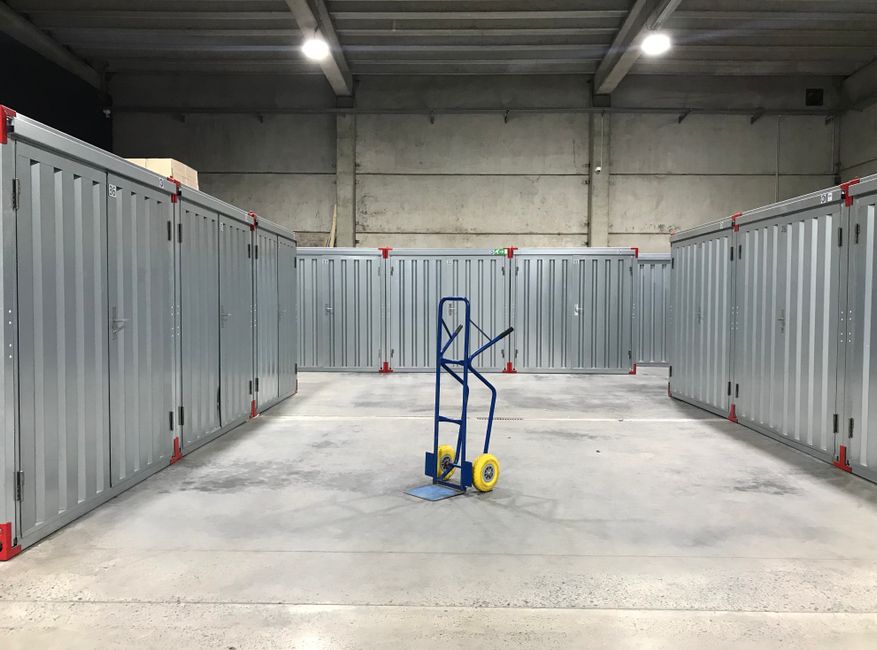
Then there is the simple efficiency gain. A van packed to the roof with gear for every possible job wastes time every morning. You shift boxes, unstack crates, and curse the one item buried at the back. A storage unit lets you load out specifically for the day ahead. Less clutter, less fuel spent hauling weight you do not need, and a faster start on site.
Business continuity is the phrase insurers use, but it translates to something simpler: if your van gets done over tonight, can you still work tomorrow? If half your kit is safe in a storage unit, the answer is probably yes. That alone justifies the monthly cost for many self-employed tradespeople.
What to Look for in a Tools and Materials Storage Unit
Not all storage units are built with tradespeople in mind. The right facility should feel like a secure extension of your business, not just a lock-up garage with a roller door.
Security That Matches the Value of Your Gear
Start with the non-negotiables. Twenty-four-hour CCTV coverage across the site, perimeter fencing that is actually maintained, and individual unit alarms that trigger if someone tampers with your door. Gated access with a unique code or smartphone app entry means there is a record of every visit, and no one wanders the corridors without authorisation. Tamper-proof locks matter too: a cheap padlock on a unit holding five figures of tools is a false economy.
Peace of mind is easy to write on a brochure, but for a tradesperson it has a direct business value. When you know your gear is secure, you sleep better, you focus on the job, and you stop factoring "check the van" into your evening routine. That mental load is real, and reducing it makes you more effective at work.
Unit Size and Accessibility for Tradespeople
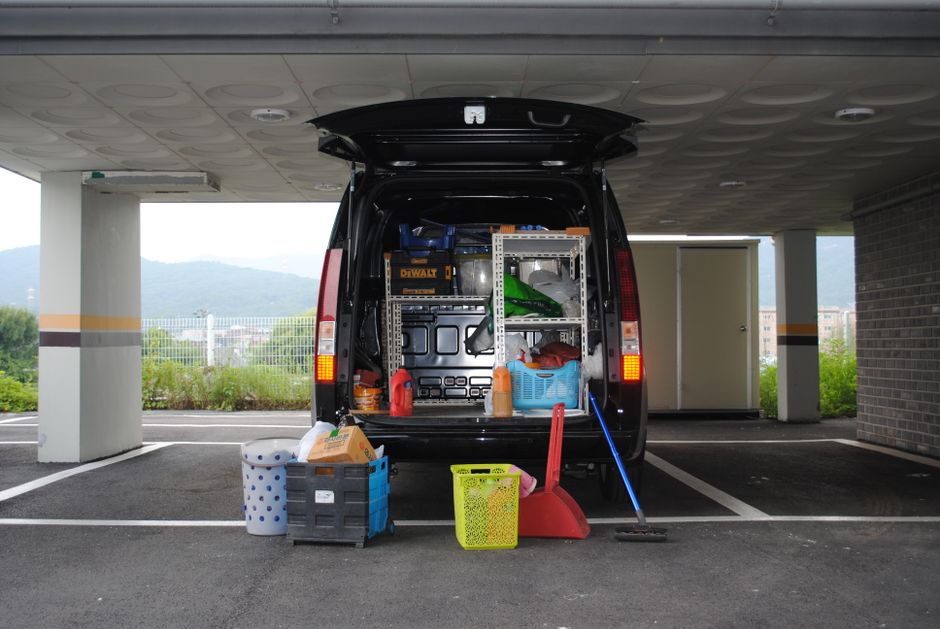
Storage units range from compact lockers around 10 square feet, suitable for a few tool chests, up to 400 square feet or more, which can hold pallets of materials, large equipment, and racking systems. A builder storing bulk cement, timber lengths, and a cement mixer needs ground-floor access with wide doors and drive-up capability. An electrician storing high-value small parts and cable drums might prioritise a smaller, upper-floor unit with excellent security and organised shelving.
Access hours matter enormously. Tradespeople often start early or finish late, and a facility that locks its gates at 6pm is useless if you need to grab materials for a 7am start on a Saturday. Look for 24/7 access as standard, ideally managed through a smartphone app so you never worry about losing a key fob. Drive-up access for loading and unloading heavy items saves your back and your time, especially when you are handling bulk aggregates or large sheets of plasterboard.
Climate Control and Fire Safety
Indoor storage units offer a stable environment that damp garages and on-site containers simply cannot match. Plasterboard absorbs moisture and becomes unusable. Adhesives and sealants separate or cure in extreme temperatures. Timber warps, and steel tools develop surface rust that shortens their working life. A well-ventilated indoor unit with consistent temperature and humidity protects your stock from the British climate's worst excesses.
Fire safety is equally critical and often overlooked. Look for facilities with dedicated fire and smoke alarm systems in each unit or corridor, not just a single detector at reception. Storing materials like paints, solvents, and gas cylinders comes with specific restrictions, and a responsible facility will be clear about what is and is not permitted. The cost of replacing stock destroyed by fire or smoke damage dwarfs any saving from choosing a cheaper, less protected site.
Self Storage vs. On-Site Containers: The 2026 Verdict
On-site containers have been the default for many builders and contractors for years. They sit on the plot, hold the kit, and seem convenient. In 2026, that convenience is increasingly hard to defend against the advantages of a proper storage facility.
The security gap is the most obvious problem. A container on a building site is protected by a single padlock and whatever fencing the site has, which is often temporary and unmonitored overnight. Thieves know this. They target containers precisely because they are isolated and predictable. A storage facility layers security: CCTV, gated access, individual alarms, and the simple fact that dozens of other units and regular staff presence create a far riskier environment for criminals.
Weather protection is another clear win for indoor units. Metal containers sweat. Condensation forms on the inside roof and drips onto whatever is stored below. Temperature swings are extreme: freezing in January, baking in July. Tools, timber, and bagged materials suffer. An indoor storage unit eliminates condensation and keeps everything at a stable temperature year-round.
Flexibility tips the balance further. A container is a fixed size and a fixed commitment. If you buy one, it is a capital cost and a depreciating asset. If you rent one, you are often tied into a long-term agreement with delivery and collection fees. A storage unit scales with your workload. You can upsize for a big project and downsize in quieter months. No business rates, no long lease, and no delivery charges. You pay for the space you actually need, and you can walk away with a month's notice.
How to Choose the Right Unit for Your Trade
Different trades have different storage profiles, and the unit that works for a painter and decorator is not necessarily right for a groundworker.
For Builders and Groundworkers
Bulk is the defining challenge. Bags of cement, sharp sand, ballast, and lengths of timber or steel take up space and weigh a lot. You need a ground-floor unit with wide access doors and drive-up capability so you can back a van or trailer right to the door. Pallet storage makes sense for larger operations: a 100 to 200 square foot unit can hold several pallets of materials with room to move around them. Check the floor loading limits and make sure the facility is comfortable with heavy, dusty materials being moved in and out regularly.
For Electricians and Plumbers
Value density is the issue here. A single crate of copper fittings, a reel of 10mm cable, or a calibrated testing meter represents a serious investment. Security is paramount, and organisation matters for efficiency. Shelving and labelled crates turn a small unit into a stockroom you can scan in seconds. Some tradespeople use colour-coded bins by job type or project phase, so grabbing what you need for a rewire versus a boiler swap takes moments rather than minutes. A 25 to 50 square foot unit is often sufficient, provided it is well laid out.
For Landscapers and Decorators
Seasonal rotation defines these trades. Summer means mowers, strimmers, hedge cutters, and irrigation kit. Winter brings salt spreaders, grit bins, snow shovels, and possibly festive lighting rigs. A storage unit lets you swap gear in and out as the seasons change, keeping the off-season equipment clean, dry, and out of your way. Decorators face a different challenge: paints, thinners, wallpaper paste, and solvents. These materials have specific storage rules. Flammable items must be stored in accordance with facility policies, and it is worth checking these before you sign up. A unit with good ventilation and clear fire safety protocols is essential.
Insurance and Liability: What You Need to Know
A common and expensive misunderstanding is the assumption that the storage facility insures your tools and materials. It does not. The facility carries insurance for the building itself, for public liability, and for fire damage to the structure. Your contents are your responsibility.
You need either a separate tool insurance policy or a specific rider on your existing business insurance that covers goods stored away from your home or usual business address. Check the policy wording carefully: some insurers require evidence that the storage facility meets minimum security standards, such as monitored CCTV and individual unit alarms. Keep that documentation handy.
Documenting what you store is just as important as insuring it. Take clear photos of your unit contents every time you add or remove significant items. Record serial numbers for power tools and high-value equipment. Maintain a simple inventory list, ideally digital, that you can produce quickly if you need to make a claim. This habit takes minutes and can save weeks of argument with an insurer.
Ask the facility what their claims process looks like if there is ever an incident. A good operator will be transparent about what they cover, what they do not, and how they support customers through a claim. If they are vague or dismissive, treat that as a red flag.
Smart Storage in 2026: Tech Tools for Tradespeople
Technology has made storage management simpler and more precise than it was even a few years ago. Inventory management apps, many of them free or low-cost, let you log what is in each crate, bin, or shelf section. You can search from your phone on site and know exactly whether you have a specific fitting or a spare blade back at the unit.
Barcode and QR code labels take this a step further. Stick a code on a storage crate, scan it with your phone when you add or remove items, and the app updates your inventory automatically. For tradespeople managing stock across multiple jobs, this eliminates the guesswork and the emergency trips to the merchant.
Smartphone-controlled access is now standard at quality facilities. No key fobs to lose, no codes to forget. You arrive, open the app, and the gate and your unit recognise you. Access logs give you a record of every visit, which can be useful for insurance and for tracking how often you are using the space.
Digital checklists for seasonal stock rotation help landscapers and decorators stay organised through the year. Set a reminder in October to swap summer kit for winter gear, and another in March to reverse it. The technology is simple, but the time and stress it saves compound quickly.
Common Questions About Storing Tools and Materials
Can I store flammable materials like paint thinners or gas cylinders? Most facilities have strict rules on hazardous materials. Small quantities of paint and solvents are often permitted if stored in sealed, labelled containers, but gas cylinders and bulk flammables are usually prohibited. Always check the facility's policy before signing a contract.
How much does a typical unit cost in 2026? Prices vary widely by location, unit size, and facility quality. A small locker might start around £15 to £25 per week, while a large drive-up unit suitable for bulk materials can run £60 to £100 or more per week. The best approach is to request a quote based on your specific needs, as most facilities offer discounts for longer commitments.
Can I run a workshop from a storage unit? Generally, no. Most facilities prohibit using units as workshops due to noise, power tool use, fire risk, and planning restrictions. Storage units are for storage. If you need workshop space, look for dedicated light industrial units instead.
What happens if I need to access my unit outside of office hours? This depends entirely on the facility. Many modern sites offer 24/7 access via smartphone app or unique access code. If out-of-hours access matters to you, confirm it in writing before you commit. Some facilities advertise 24/7 access but restrict it to certain unit types or require an additional fee.
Secure Your Gear with Middleton Self Storage
A tools and materials self storage unit should do more than hold your kit. It should protect your livelihood, simplify your working day, and give you one less thing to worry about when you lock up at night. Middleton Self Storage offers secure, flexible units across Birmingham and the surrounding areas, with 24/7 access, modern security systems, and terms that work for tradespeople.
Whether you are a builder storing bulk materials, an electrician protecting high-value components, or a landscaper rotating seasonal equipment, we have unit sizes and access options to match. Visit the Middleton Self Storage website to check current availability, compare unit sizes, and find a solution that fits your trade and your budget.